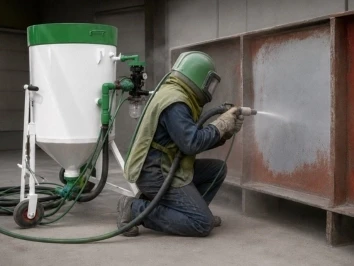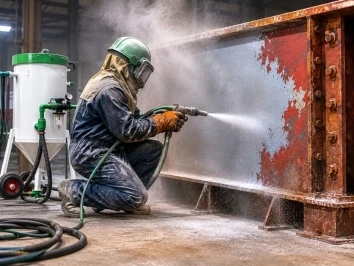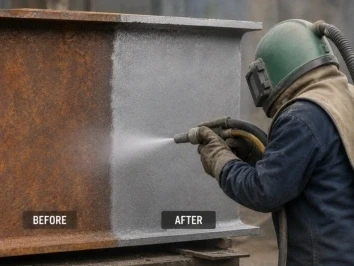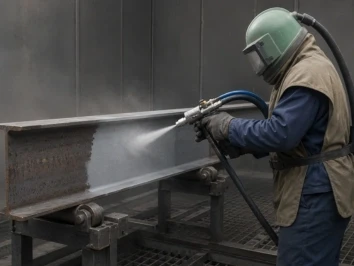
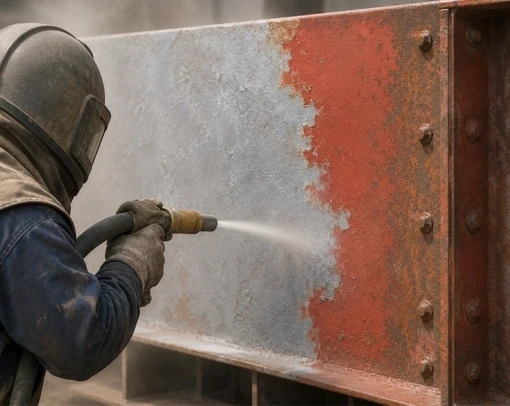
Effective sand blaster paint removal uses a pressurized abrasive stream to lift failed primers, intermediates, and topcoats while holding anchor profile inside the range your repaint system requires. The outcome is not a quick cosmetic scuff; it is a controlled strip that reaches agreed cleanliness, exposes sound substrate, and hands painters a surface they can prime before flash rust or contamination returns.
Sand Blaster Paint Removal for Coating-ready Metal
Scopes should name alloy type, coating chemistry, visual standard, profile limits, masked zones, and how primer timing aligns with dew point and shift calendars. When those items stay verbal only, turnover debates cluster at stiffeners, flange toes, and ladder clips where access is hardest.
Choosing a Sand Blaster for Paint Removal on Industrial Work
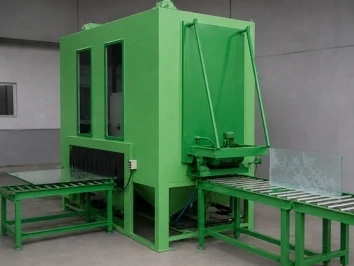
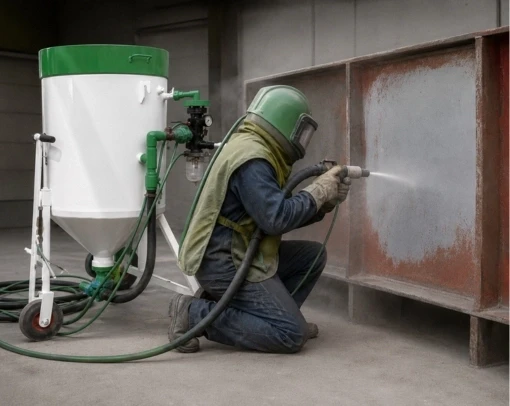
When buyers specify a sand blaster for paint removal on tanks, pipe racks, and structural steel, they are really buying air compressor CFM, pot capacity, nozzle selection, and crew discipline. Portable rigs suit touch-ups and field campaigns; fixed booths suit batch parts with predictable rebound. Quotes should state which configuration applies so lift tickets and painter crews book in the correct order.
Nozzle wear, media consumption, and shift math
Sharp minerals accelerate tip wear; running out of matched nozzles mid-outage idles painters downstream. Daily logs that compare planned versus actual square meters keep project controls honest about whether the critical path is drifting through heat waves, wind delays, or unexpected coating thickness on aged assets.
Using a Sand Blaster to Remove Paint
Operators using a sand blaster to remove paint must match the aggression to the gauge. Thin automotive skins and ornamental scrolls need smaller nozzles, lower pressure, and shorter dwell to limit warp and peening. Heavy plate, skids, and tank shells may tolerate more direct energy. Test patches on hidden faces confirm strip rate before full elevation work begins.
Masking threads, bores, and glass-adjacent edges
Plugs, tape, and shields protect threads, seal surfaces, and windows from embedment and stray rebound. Photograph mask lines at handover so assembly teams know which features were intentionally left untouched versus areas still scheduled for mechanical touch-up.
Paint Removal Sand Blaster Coating Chemistry
A paint removal sand blaster campaign interacts differently with epoxies, urethanes, alkyds, and powder coats. Multi-layer stacks may need staged passes rather than one aggressive sweep that risks gouging soft metal. Your new coating vendor’s data sheet translates into profile and cleanliness targets that belong in the daily inspection log, not informal “looks good” sign-offs at shift end.
Lead-based and regulated films
Older industrial and architectural paint may require sampling, enhanced PPE, containment, and manifesting for debris. Dust control near occupied buildings is not optional when pigments are suspected to disclose building age and maintenance history during technical review.
QA Sign-off for Sand Blaster Remove Paint Programs
When specifications require that a sand blaster remove paint completely to an agreed visual standard, inspectors expect witness coupons, gauge readings where applicable, and photographs of difficult geometry. Digital turnover packs reduce arguments about coverage at closeout. Tie-in blasting at weld repairs must feather into sound coating without holidays; painters will reject at the gun. Paint removal sand blaster is working, need sand blasting machine spare parts such as dust collector, air compressor, sand blasting nozzle, sand blasting helmet, sand blasting pipe, remote control valve, etc.
Handoff timing and flash rust control
Bare metal clocks start when dust lifts. Agree on maximum hold time, humidity limits, dew-point monitoring, and whether inhibitors are allowed before stripe coating welds. When priming cannot follow immediately, write holdback rules and re-blast touch criteria so disputes do not appear at final QC.
Shop booths versus field containment
Yard booths control rebound, lighting, and recovery for trailerable gates, beams, and OEM frames. Field work on installed steel adds wind, ground moisture, and shared crane hooks. Urban facades may need curtain walls, night-only windows, and sound limits spelled out in the permit pack before high-visibility elevations open.
Urban neighbors and community optics
Pre-walks with facilities and community liaisons reduce stop-work surprises after blasting has already started on public-facing walls. End-of-shift cleanup photos support audits when dust is politically visible.
Structural turnarounds, piping, and equipment skids
Shutdown paint removal on flanges, vessel skirts, and skids often runs beside live lines. Barricade drawings, gas monitoring for confined volumes, and instrument covers belong in the hazard analysis. Separate mobilization, labor shifts, abrasive media tons, disposal, equipment rental, and weather standby so procurement can benchmark fairly across bidders.
Automotive, restoration, and thin-gauge discipline
Chassis and undercarriages may tolerate more direct energy than outer panels. Log panel temperature on sunny days so crews do not chase strip speed at the expense of metal movement. Restoration customers judge warp, pitting, and media embedment near seams as much as calendar speed.
Waste, housekeeping, and documentation
Paint chips and spent abrasive still require drums, labels, and manifests where regulations apply. “Dry” blasting does not eliminate paperwork when coatings are regulated. Digital records speed turnover packages for owners, EPCs, and coating inspectors.
Comparing strip methods before the award
Chemical stripping, laser, and power tooling have niches, but wide-area industrial repaint programs usually return to an abrasive blasting machine for a uniform profile. Understanding where alternatives stop saves paying twice on the same elevation when the specification still demands measurable anchor texture.
Coastal humidity and soluble salts
Salt under old paint may require washing or salt tests after stripping. Coastal humidity compresses primer windows sequence shifts, so painters are staffed when blast crews call surfaces ready, not hours later after flash rust appears.
Search visibility without empty ranking promises
No ethical vendor guarantees automatic “top rank” in search engines. Sustainable visibility comes from helpful technical pages, fast mobile performance, accurate schema, and outcomes inspectors can verify on site with clear photos and signed logs. We focus on documented strip quality, agreed profile, and coating-ready handovers, not repetitive keyword blocks.
Share substrate photos, coating layer history, approximate area, access method, environmental sensitivities, and target primer or lining system. Note shutdown dates and whether compressed air, lifts, or containment are owner-furnished so assumptions stay realistic for your full paint stripping program across every shift and weather window.