Sand Blaster for Glass Etching frost depth you can sign off under raking light
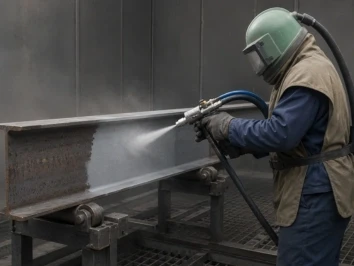
Studios, signage shops, and architectural glass processors choose a sand blaster for glass etching when they need repeatable opacity, crisp stencil edges, and production rhythm that chemical etch alone cannot match on every job mix. The etch glass with sandblaster process is not miniature structural blasting: thin lites, tempered panels, and coated faces punish aggressive pressure, coarse media, and long dwell. Success means recipe control, media grade, pressure band, stand-off, pass count documented so second-shift operators match first-shift panels, and customer photographs at installation.
What to define before you buy or commission equipment
Scopes should name glass family, tempering status, stencil material, minimum bridge width, target mil depth or visual frost level, daily piece count, and whether work runs in a cabinet or open bay. Without that brief, two quotes for the best sandblaster for etching glass often price differently, depending on the risk; one assumes privacy-band frosting only, the other assumes deep carving on laminated assemblies.
Choosing the Best Sandblaster for Etching Glass
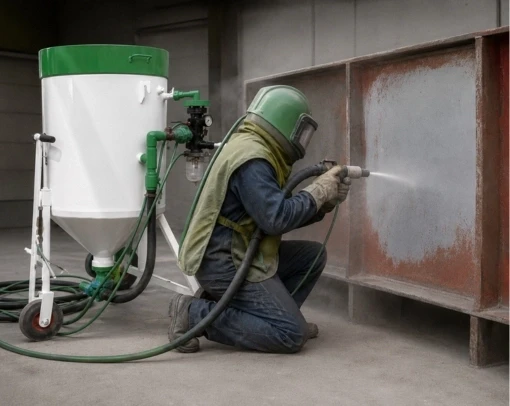
The best sandblaster for etching glass for a boutique studio is rarely the largest cabinet on a brochure. It is the configuration that pairs dry compressed air, stable metering, fine-media recovery, and lighting that reveals registration marks without glare. High-volume architectural lines may add turntables, pass-through slots, or second stations, but only after hand-gun coupons prove depth targets on your substrate. Compare sustained CFM and air drying ahead of pot capacity labels; an oversized sand blasting hopper on weak air starves the nozzle and produces uneven sandblast etching belts across the panel.
Small shop versus production hall layouts
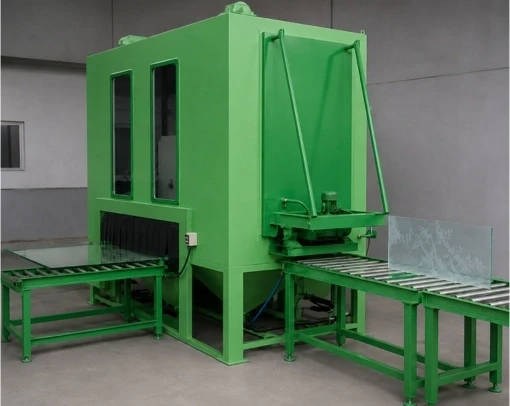
A small sandblaster for glass etching can be a compact cabinet with glove ports and cartridge dust collection sized for fine particulate, not steel grit loading assumptions. Production halls need the same discipline at a larger envelope scale: baffled ceilings, window protectors, and interlocks that prevent blasting with doors open when helpers adjust stencils mid-cycle.
Sandblasting Media for Glass Etching
Sandblasting media for glass etching should mean fine, consistent aluminum oxide or controlled glass bead, not construction sand, heavy slag, or mixed bags that chip stencil bridges and scatter light unevenly. Particle size changes how fast frost builds and how much heat accumulates at the nozzle. Lot discipline matters: swapping media mid-job without updating recipe cards is how privacy bands pick up visible texture steps across one elevation. We help teams publish approved grades, forbidden substitutes, and disposal paths for spent fines because glass dust housekeeping is part of the application story, not an afterthought.
Sandblast Etching Technique
Sandblast etching rewards moving lances, consistent overlap, and respect for minimum bridge widths on vinyl, rubber, or photoresist masks. One aggressive pass to “save time” often collapses fine logo lines or blows adhesive edges that looked safe in the design file. Multi-pass depth builds light frost first, carve second, protect thin crowns on heat-treated glass when coupons approve the sequence. Operators should log pressure, media lot, and stand-off so trainees reproduce studio-quality results on week one, not only after months beside a senior craftsperson.
Small Sandblaster for Glass Etching
A small sandblaster for glass etching comparison should include air compressor hire or upgrade, air drying, filter spares, PPE, and rework risk when parameters were never proven on test glass. Lower cabinet price loses money if panels fracture, frost depth drifts, or dust triggers complaints from adjacent offices. Studios blasting weekly often cross over to owned units with documented spare pipelines; occasional users may rent but should still budget method time from experienced supervisors on the first complex stencil set.
Cabinet visibility, dust, and neighbour optics
Even fine-media sandblast etching produces respirable fines. Enclosed cabinets capture rebound, stabilize lighting for registration, and support interlocks. Open-bench habits invite dust migration and scratch contamination on stacked panels waiting for tempering or lamination. Filter sizing must reflect glass and oxide fines loading; steel grit collector assumptions, undersize maintenance intervals, and starve visibility through glazed windows.
Tempered glass, laminates, and coated surfaces
Heat-treated glass requires conservative parameters and explicit coupon approval; some coated faces reject abrasive contact on the wrong side. Laminated assemblies need clarity about which layer is etched and how the interlayer edges stay protected from moisture after blow-off. Ethical scope language states exclusions when samples were not supplied, universal compatibility promises fail at the first chipped tempering job.
Signage, architectural privacy bands, and decorative motifs
Signage programmes need crisp stencil edges under entryway sun; architectural privacy bands need even opacity across four-metre heights without zebra striping from sweep variation. Shower and interior decorative panels add turntable ergonomics and pass-through planning. OEM appliance glass may justify motion aids when brand guidelines forbid visible gun sweep marks across hundreds of panels per week.
Glass Etching Sandblast Cabinet
A glass etching sandblast cabinet stays productive when nozzle orifices, window protectors, gloves, and filters follow wear schedules tied to logged hours. Orifice growth deepens frost faster than recipes assume; teams discover the drift only when a hospitality deadline panel fails raking-light approval. Daily sand blasting hose and deadman inspection remains mandatory; fine media does not remove injection risk from high-pressure air.
Abrasive Etching Glass
Abrasive etching glass excels where mechanical frost, tactile depth, and stencil flexibility matter; acid etch and laser have niches for certain line weights and production mixes. Hybrid shops often abrasive-etch primary fields and reserve acid or laser for micro-detail only where the specification allows. Understanding where each method stops prevents paying twice on the same light when the customer still expects uniform frost under raking light.
QA checks, raking light, and customer turnover
Quality approval should include raking-light photos at FAT and periodic production spot checks, not only arm’s-length viewing. Rejected criteria belong in plain language shared by creative, operations, and purchasing leads. Blow-off and handling after etch prevent oily residue or finger marks from contaminating frost before tempering or lamination continues downstream.
Search visibility without empty ranking promises
No ethical supplier guarantees automatic “top rank” in search engines. Sustainable visibility comes from helpful technical pages, accurate metadata, fast mobile performance, and outcomes customers can verify recipe cards, mil-depth consistency, and dust discipline, not repetitive keyword blocks. We focus on documented frost targets and equipment class matched to your air budget and stencil complexity.
What to send for a faster equipment or process quote
Share glass type, sand blasting stencil artwork, photos under raking light, target opacity, daily volume, cabinet versus open-bay context, and site air quality notes. We respond with sand blaster for glass etching class recommendations, sandblasting media for glass etching starting points, and realistic commissioning assumptions before you release fabrication or purchase orders.