
Mobilized surface preparation
On Site Sandblasting
at your plant, tank farm, or project coordinatesWe bring compressors, containment, and disciplined nozzle crews to your site so heavy steel, installed racks, and outage worklists get coating-ready prep without double-handling assets to a distant yard.
Core Service Section
On Site SandBlasting Services
Core services for on site sandblasting deliver mobilized surface preparation at your plant, yard, tank farm, or infrastructure location without shipping heavy steel through traffic twice. We engineer containment, compressor placement, air drying, and shift logistics around your gate rules, live units, and neighbor context. Each sand blasting machine service scope defines the blast cleaning standard, surface cleanliness level, access method, abrasive blasting process, dust control system, waste collection procedure, and final bare metal preparation. It also covers blasting equipment performance, operator safety measures, media handling, and timely handover to the painting contractor within the agreed project schedule.
Mobile Sandblasting Onsite
Our field leads run pre-mobilization walks with your EHS and operations teams, photograph difficult geometry, and lock daily production targets to accessible square meters, not brochure rates from empty lots. Whether you need on-site abrasive blasting during a shutdown window or staged mobile sandblasting onsite for tank externals, you receive one integrated method statement from arrival through turnover documentation.
- Mobilized crews with a pot sand blaster, an air compressor, and containment packages sized to the scope
- Coordination with scaffolding, insulation removal, and paint sequencing
- Environmental cutoffs, barricades, and shift-end housekeeping photos
- Localized repair blasting with feather and stripe rules tied to isometrics
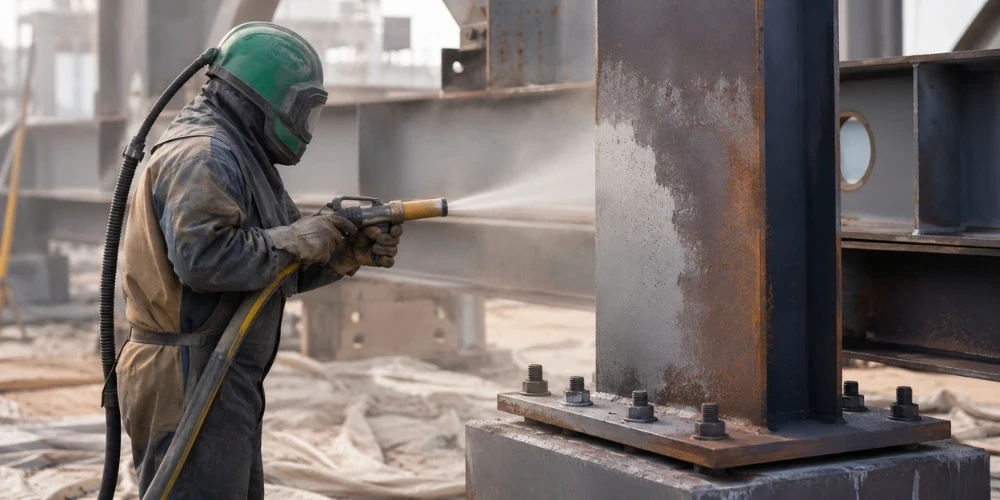
Service planning begins with understanding base metal condition, contamination type, and required finish before choosing blasting method.
Lead trigger: accurate scope definitionBetter outcomes come from selecting the right abrasive media, pressure band, nozzle setup, and coverage sequence for each application.
Lead trigger: right process for right surfaceFor production-critical jobs, structured communication on schedule, consumables, and maintenance support improves operational confidence.
Lead trigger: low-downtime service deliverySpare Parts Services
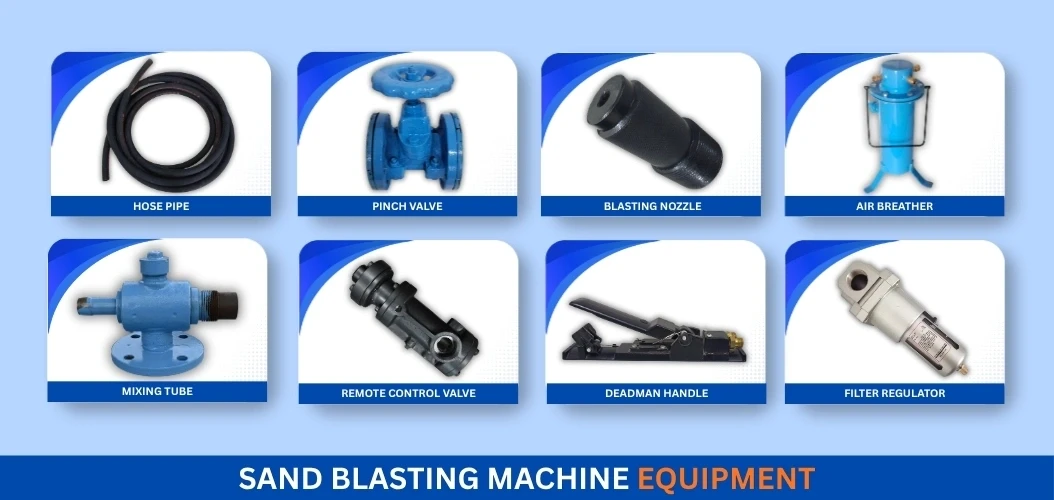
Onsite Mobile Sandblasting Spare Parts
Spare parts services keep on-site sandblasting rigs producing through night shifts and weather surprises. We align sand blasting spare parts to your declared nozzle series, blast hose diameters, holder gaskets, and pot wear items, so a mobilized sandblasting crew does not burn hours waiting for express couplings. Stocking recommendations follow weekly blow hours, media abrasiveness, and whether you run long hose bundles across piperacks. Each pattern consumes throat inserts and couplings at different rates.
Support includes serial-tagged parts lists, pre-mobilization packing checks, and honest lead-time flags on long-cycle items. Training covers whip-check cadence, dry storage for spare nozzles on humid sites, and winterization when pots idle outdoors between blows. Optional maintenance windows add orifice measurement and hose OD inspection, so procurement sees wear trends before the next industrial onsite sandblasting campaign.
- Nozzle sets, sand blasting nozzle holders, and gaskets matched to your pressure and media plan
- Sand blast hose, couplings, and deadman handle spares sized to the field layout
- Pot seals, pop-up wear items, and metering wear components
- Shutdown packs quantified against declared simultaneous blows and hours
 Portable Blast Pot
Portable Blast Pot
Heavy-duty portable blast pot stores abrasive media securely and delivers consistent pressure, making on site sandblasting operations efficient and easy to manage.
 Industrial Blast Hose
Industrial Blast Hose
Durable industrial blast hose withstands harsh outdoor conditions and high-pressure abrasive flow, ensuring reliable performance during field blasting applications.
 Tungsten Carbide Nozzle
Tungsten Carbide Nozzle
Wear-resistant tungsten carbide nozzle provides focused abrasive projection for fast rust, paint, and coating removal on large industrial surfaces.
 Pneumatic Control Valve
Pneumatic Control Valve
An advanced pneumatic control valve regulates airflow and abrasive discharge accurately, improving blasting consistency and reducing equipment pressure fluctuations.
 Moisture Separator Unit
Moisture Separator Unit
High-efficiency moisture separator unit removes water contamination from compressed air systems, preventing abrasive clogging and maintaining stable blasting output.
 Remote Deadman Handle
Remote Deadman Handle
Safety remote deadman handle instantly stops blasting when released, improving operator protection and ensuring safer on site blasting operations.
 Dust Collector
Dust Collector
An effective dust collector attachment minimizes airborne particles during blasting work, improving visibility and maintaining cleaner outdoor working environments.
 Portable Wheel Assembly
Portable Wheel Assembly
Rugged mobile wheel assembly supports smooth transportation of blasting equipment across industrial sites, enhancing portability and operational flexibility.
Maintenance Services
Maintenance Support That Protects Uptime
On site sandblasting when moving the asset is the wrong economics
Heavy fabrications, installed steel, tank farms, and live process plants rarely ship cleanly to a fixed blast booth. On site sandblasting brings air compressors, recovery where specified, containment, and experienced nozzle operators to your coordinates so downtime stays tied to your outage window, not to trucking, crane hire, and double handling. The discipline is identical to yard work: agreed cleanliness or profile, dust and debris control, and a bare-metal clock your primer crew trusts.
How onsite sandblasting scopes differ from shop-only jobs
Onsite sandblasting inherits your gate rules, power availability, lighting, weather exposure, and neighbor sensitivity. Method statements must name barricade geometry, shift-end housekeeping, and who owns waste drums or vacuum blasting machine truck cycles. When procurement treats field mobilization like a line item copied and pasted from a shop quote, budgets break on the first rainy week or the first night the adjacent unit complains about grit on cars.
On-site sandblasting services your specification should spell out
Serious on-site sandblasting services proposals include access assumptions (scaffold versus rope), maximum simultaneous blows, compressor placement and grounding, air drying on the blast line, and environmental cutoffs for wind or humidity. They also state exclusion zones around live electrical, instrument cable trays, and open sumps. If your tender only says “sand blasting and painting,” you will negotiate those realities later at premium rates.
Mobile sandblasting onsite for tanks, pipe racks, and bridges
Teams advertising mobile sandblasting onsite should prove they can stage bulk abrasive safely, segregate carbon and stainless workflows when both exist, and sequence lifts so blasters are not idle while cranes serve another trade. Tank externals and bridge touch-ups often need shrouds, negative air where required, and disciplined end-of-shift photos. The word “mobile” promises logistics; engineering still delivers profile and coating readiness.
Field sandblasting and coordination with multi-contractor sites
Field sandblasting during turnarounds means hot-work permits, fire watch overlap, and clear radio discipline when scaffolding hands off between insulation removal, blasting, and painting. Daily production targets should reference accessible square meters, not fantasy numbers from an empty parking lot demo. Your lead should see blast, prime, and topcoat hours on one integrated schedule, not three siloed bars that pretend no handoff exists.
Portable sandblasting at your facility without improvising containment
Even portable sandblasting at your facility needs engineered curtains or tents when HVAC intakes, food-grade lines, or clean rooms sit upwind. Portable describes the equipment footprint, not permission to ignore dust migration. Ask for drawings or annotated photos of planned containment before mobilization day, especially on congested piperacks where rebound finds cable trays faster than humans expect.
Onsite abrasive blasting for corrosion maintenance on windows
Maintenance managers schedule onsite abrasive blasting when localized under-film corrosion, mechanical damage, or coating holidays threaten the next operating season. The work may be small in area but high in consequence at flange faces and weld toes. Feathering rules, stripe coating sequences, and agreed tie-in limits on isometrics keep painters from discovering “blast surprise” at turnover.
Industrial onsite sandblasting and substrate honesty
Industrial onsite sandblasting on mixed-age plants must account for leaded paints, brittle old epoxies, and hidden galvanizing. Sampling and waste characterization belong in the pre-job hazard pack. Crews should rehearse what happens if wind shifts send plumes toward a public road or if a neighbor’s intake alarm triggers pause triggers, beat apologies after the fact.
Sandblasting at your facility: power, water, and laydown
When vendors promise sandblasting at your facility, confirm who supplies three-phase power, pot refills, potable sand blasting machine or process water for dust suppression if used, and laydown for empty supersacks. Night shifts need lighting with lux targets and glare control toward traffic. Security badging, tool lists, and vehicle escorts are not abrasive science, yet they determine whether the first shift starts on hour one or hour six.
Mobilized sandblasting crew readiness and spare philosophy
A mobilized sandblasting crew is only as good as its consumables: matched nozzles, whip checks, blast hose inventory, and couplings sized to your pressure plan. Mid-outage express freight for a forgotten gasket series is expensive morale damage. Strong vendors publish spare rates per week of declared hours and carry baseline kits sized to your boron carbide nozzle family before wheels roll.
Quality checks that survive third-party inspection
Field supervisors should schedule coupon pulls, visual standards under agreed lighting, and holiday detection on critical welds before paint crews claim readiness. When sandblasting at your facility runs beside other crafts, designate a single blast-and-paint interface owner so arguments about dust on tacky primer do not bounce between contractors. Digital closeouts time-stamped photos, blower readings, and signed perimeter walks travel better than verbal handoffs in a noisy turnaround tent.
Neighborhood, traffic, and community optics
Urban or roadside jobs add traffic management, dust plume optics toward sidewalks, and sometimes overnight noise limits. Communicate blast windows to security and local authorities where permits require it. A disciplined onsite sandblasting program treats community patience as a consumable: end shifts with visible cleanup, not with “we will get it tomorrow” grit on guardrails.
Safety culture beyond the checklist
Compressed-air blasting demands deadman controls, daily hose inspections, and respiratory programs that match the blasting hood or line air actually issued. At your site, those programs intersect with your lockout/tagout, confined-space rules for vessels, and height rescue plans on the scaffold. Combined orientations reduce “we did not know your rule” incidents that stop work and poison relationships between trades.
Commercial transparency owners should demand
Line items for mobilization, demobilization, equipment rental, media tons, disposal, weather standby, and height access keep benchmarking honest. Compare vendors on identical boundaries: same areas, same cleanliness class, same environmental constraints. Helpful long-form pages and fast mobile performance support discovery; they do not replace clear scope language in your purchase order.
What to send for a fast, accurate field quote
Provide site address, photos of work areas, approximate blasted area, coating type to remove, height access method, environmental sensitivities, and target primer system. We respond with a mobilized on site sandblasting plan containment sketch, production assumptions, and exclusions so your turnaround or maintenance window stays defensible to QA and finance before compressors arrive.
Routine inspection guidance reduces unexpected stoppages and improves planning for blasting checks and consumable replacement.
Lower operating riskFast support for abrasive flow issues, nozzle wear, pressure drop, and uneven surface finish without long operational delays.
Quick service responseOperational guidance on setup, consumables, and usage patterns helps improve finish quality, coverage speed, and service efficiency.
More value from investmentRequest an On Site Sandblasting Plan
Share site photos, area estimates, access method, and environmental sensitivities. We reply with mobilization, containment, and production assumptions in plain language.
- Free technical consultation
- Customized quote with 30 minute response
- No spam, no obligation
- Direct from manufacturer pricing
- WhatsApp support available
- AMC and maintenance support available
Share a few details — our experts reply within 30 minutes with pricing and recommendations.
100% secure. We never share your information.
Why this service page exists
Maintenance heads, project teams, and fabrication buyers usually evaluate service capability before finalizing vendor discussions. This page is designed to present sand blasting service strength with clearer process, support depth, and execution confidence.
This section is designed as an enterprise value presentation to improve trust, clarify service capability, and support faster technical-commercial decisions.
Service scope, surface requirement mapping, and process planning aligned to target finish and production constraints.
Built for practical executionStructured method selection and consumable guidance support uniform cleaning profile and coating-ready surfaces.
Stronger outcome reliabilityBetter coordination for manpower, consumables, machine readiness, and service schedule to reduce project delays.
Lower onsite frictionAfter-service continuity through spare support, troubleshooting access, and preventive guidance that keeps operations stable.
Supports long-term service value